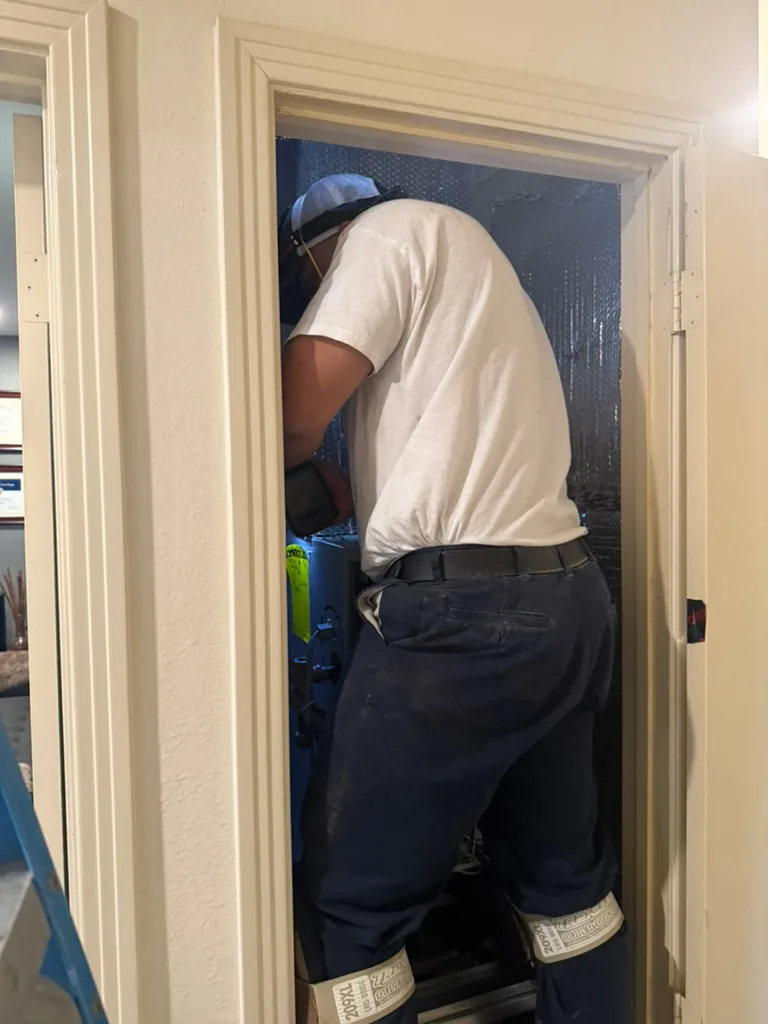
Top 5 Common Heating Problems and How to Fix Them
Summary:
Common heating issues include pilot light problems, thermostat malfunctions, low heating, noisy heaters, and short cycling. While some of these issues can be easily solved with DIY solutions, others require professional HVAC specialist handling. This article helps you save money by recommending simple fixes before escalating to a professional HVAC maintenance company.
Table of Contents
Introduction
As the colder months roll into Orange County, homeowners must ensure their heater has been serviced in preparation for intensive heating operation. Heating system care is recommended annually, usually before the beginning of winter. However, even with heater maintenance, issues can occasionally arise.
The good news is that many heating issues have simple solutions and certain measures to ensure they don’t happen again. The loss of heating power in the middle of winter is something your family should never experience. In this article, Klondike Air explores the top 5 common heating problems and how to fix them.
Contact Us for Heater Maintenance
Common Heating Issues You Should Know About
Before your heating system broke down, it would have shown some signs of malfunction. Simple heating issues are easy to fix if you know what to look for. Some common heating issues include:
1. Pilot Light Problems and Their Fixes
A pilot light is a gas flame present in older furnaces. It is a source of ignition for the larger burners inside the furnace. If the pilot light does not work well, the heater will also not work well, leading to inefficient heating or cold drafts.
To solve pilot light issues, you need to understand the problem. Some causes of faulty pilot lights include high winds or downdrafts, low gas pressure, insufficient gas supply, loose thermocouples, a bad gas valve, and a cracked heat exchanger.
To solve high winds and downdraft, seal any cracks in the walls and add weatherstripping to windows and doors. If the problem is with low gas pressure, you should clean the gas valve to ensure that dirt and debris blocking the gas supply are removed.
However, if the problem is a loose thermocouple or a cracked heat exchanger, you should get a professional HVAC contractor to inspect and resolve it.
2. Thermostat Malfunctions and Solutions
The thermostat is the brain of your HVAC system. If the thermostat is not working correctly, it will affect the efficiency of your heating system. Some common thermostat problems include faulty installation, power supply issues, wiring problems, calibration issues, incorrect settings, and poor location.
|
Thermostat Issues |
Their Solutions |
|
Displaying the wrong temperature |
Calibrate the thermostat and change its location away from drafts, direct sunlight, or heat sources for more accurate readings. |
|
Thermostat not responding |
Check the power source and replace the batteries if they are dead. Also, check for a blown fuse and loose wiring. |
|
Heating system not turning on. |
Confirm that the thermostat has the right temperature. Also, check the circuit breaker for tripped breakers and loose wiring. |
|
Blank display |
Check the power source. Replace batteries if it is a battery issue. If it is a wiring problem, call a professional. |
|
Faulty temperature sensors |
If possible, replace the sensor. |
3. Low Heat Output and How to Resolve It
Low furnace output is a common heater maintenance problem in Orange County, especially during the heating season when the load on your heater is high. If your heating system is not putting out enough heat, it could be caused by clogged air filters, an undersized furnace, or a blocked drain pipe.
|
Low Heat Issues |
Their Solutions |
|
Clogged Air Filter |
Try cleaning the air filter and see if the situation improves. If it does not, consider changing the filter for a new one. |
|
Undersized Furnace |
If your furnace is too small for your home, the system will struggle to provide enough heat to keep it comfortable. In that case, you will have no choice but to get another system. |
|
Blocked Drain Pipe |
A partially blocked drain pipe will cause a pressure switch fault, leading to low heat output. Clear your drainage pipe to ensure efficient heating. |
4. Noisy Heater: Causes and Solutions
When your heater or furnace runs, it should make a gentle blowing sound, but not strong enough to distract you or call your attention to it. Some potential causes for a noisy heater include a loose panel, motor bearing issues, fan belt problems, or delayed ignition.
|
Noisy Heater |
Solution |
|
Loose Panel |
A panel out of place due to a loose or missing screw can cause rattle or banging sounds from your heater. You should tighten and replace loose screw to prevent noisy operation and further damage. |
|
Motor Bearing Issues |
Unlubricated motor bearings can cause a grinding noise when your heater runs. To prevent wear and tear, you should lubricate motor bearings every year. |
|
Fan Belt Problems |
A loose or weak fan belt can cause a rattling, slapping, or squealing sound. To stop the noise, tighten or replace the fan belt. |
5. Short Cycling: What It Is and How to Fix It
If your furnace turns on and off too frequently, it is called short cycling. A common cause of short-cycling is when your heater is too big for your house. Unfortunately, the only heating system fix for an oversized heater is to get a properly sized one. Other causes of short cycling include dirty air filter, clogged flue, and faulty thermostat.
|
Short Cycling Causes |
Solutions |
|
Dirty Air Filter |
Remove the air filter and replace it with a fresh one. Ensure that the arrows on the frame of the filter run in the same direction as the system’s airflows. |
|
Clogged Flue |
To fix a clogged flue, disassemble it and check for obstructions. Then, clear out all debris and dirt, reassemble the flue, and start the heater again. |
|
Faulty Thermostat |
A weak or dead thermostat can cause short cycling. To fix this, start by replacing the filter batteries with fresh ones and ensuring the temperature is not too high. |
Why Heater Repair Is Crucial for Winter Comfort
Regular and proactive heating system care is crucial to maintaining optimal performance, extending the lifespan of your equipment, reducing maintenance costs, ensuring energy efficiency, and protecting your family from harsh temperatures.
1. Preventing Breakdowns with Regular Heater Maintenance
Scheduling regular maintenance helps prevent the breakdown of your heating system. Potential problems can be resolved before they lead to major faults and system failure.
2. Saving on Heating Bills with Timely Repairs
Regular heater maintenance helps enhance the efficiency of your heating system. Your technician will resolve all issues that can force the system to work harder and consume more energy. Thermostat checks also ensure the right calibration and proper functioning, which is essential for an efficient heating operation.
3. Choosing the Right Professional for Heater Repair
Heating system care is vital in preparing for the cold months, so you must choose the right partner for your safety, convenience, and comfort. When choosing, consider the following factors:
- Insurance and Licensing
- Expertise and Experience
- Customer Reviews and Testimonials
- Availability and Response Time
- Compare price and Warranties
Edit Content
"*" indicates required fields
Conclusion
Heating maintenance does not always seem necessary until your equipment breaks down, and you must find an available emergency repair company. At the very least, if your heater shows symptoms of any of the problems above, you now know how and what it takes to fix it. However, if the issue is more complicated or requires internal or electrical fixes, call a professional heating system care specialist. Contact us at Klondike Air for your regular and emergency heating maintenance.
FAQs
How do you fix heating problems?
Check if your thermostat is responding, check thermostat settings, change air filters, check circuit breakers, ensure the furnace door is securely closed, check your gas valve, and check the ON/OFF switch. If none of that works, it is time to call in the professionals like Klondike Air.
Why is my heating system not turning on?
Check that the thermostat is set correctly and that the heating system receives power. Also, check the circuit breaker or fuse box for any issues.
Why is my heating system not producing enough heat?
Check the thermostat settings and ensure they are high enough to produce heat. Also, check the air filter and replace it if it is dirty. Ensure that all vents and radiators are open and unobstructed.
Why is my heating system making strange noises?
Various issues, including loose or worn-out parts, air in the system, or a malfunctioning burner, can cause strange noises. Check the heating system’s belts and pulleys for wear and tear and ensure all connections are secure.
Why is my heating system leaking water?
Various issues, including loose connections, corroded pipes, or a malfunctioning boiler, can cause leaks. Check the heating system’s pipes and connections for signs of leaks or damage.
Why is my heating system’s pilot light not staying lit?
A pilot light that won’t stay lit can be caused by various issues, including a dirty or clogged pilot light orifice, a faulty thermocouple, or a malfunctioning gas valve. Check the pilot light orifice and clean it if necessary.
How often should I replace my heating system’s air filter?
Depending on usage and indoor air quality, it’s recommended that your heating system’s air filter be replaced every 1-3 months.
Can I install a new heating system myself?
While it’s possible to install a new heating system yourself, it’s not recommended. Heating systems can be complex and require specialized knowledge and skills to install correctly and safely.
How do I know if my heating system is energy-efficient?
Look for the ENERGY STAR label, which indicates that the heating system meets energy efficiency standards set by the U.S. Environmental Protection Agency.
How do I prevent my heating system from freezing during freezing weather?
To prevent freezing, insulate exposed pipes, seal gaps or cracks in your home’s foundation or walls, and maintain your heating system.