HVAC Repair: When to DIY and When to Call the Pros
Summary:
When should you resolve your HVAC issues, and when is the best time to call the pros? This article examines the common HVAC system problems and the best solutions.
Table of Contents
Introduction
HVAC units are the most important home equipment as they protect your family from allergies and keep you comfortable. However, without regular maintenance, this equipment will develop faults, malfunction, and compromise indoor air quality and household safety.
Fortunately, HVAC problems are easy to notice right away. And while some of the issues can be resolved independently, others require expert HVAC repair services.
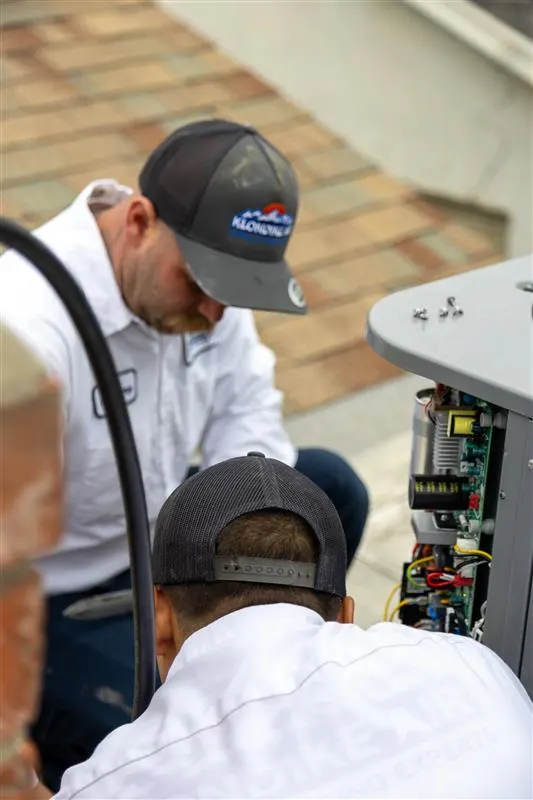
In this article, Klondike Air experts discuss which HVAC problems you can fix independently and when it is best to call a professional.
Contact an HVAC Technician Now!
DIY HVAC Repairs: What You Can Fix Yourself
HVAC units are complicated and sometimes require complex fixes. But some simple repairs you can do yourself include filter cleaning and changes, checking thermostat settings, and duct maintenance.
1. Cleaning and Replacing Air Filters
Cleaning and replacing your filters is a simple yet essential HVAC maintenance task. Your air filters keep dust, pollen, allergens, and other particles away from your home. However, these filters can become dirty over time, forcing your system to work harder and letting air pollutants into your home.
Klondike Air experts recommend changing your filter every 1-3 months. And if you have pets or live in a dusty area, you may need to change them more frequently.
To change your filter:
- Locate the filter housing (usually near the air handler or return vent)
- Note the size and type of filter currently installed
- Turn off your HVAC system
- Remove the old filter and note which way the airflow arrow points
- Insert the new filter with the airflow arrow pointing in the same direction
- Secure the filter and close the housing
- Turn the system back on.
2. Checking Thermostat Settings
If your HVAC system blows out air at the wrong temperature, your thermostat may be adjusted to the wrong setting. This is a common issue with smart and programmable thermostats, which can be tricky to program, especially if it is your first time.
Verify that your thermostat is set to heating mode if you want heat, and cooling mode if you need air conditioning. You may also need to manually override settings on your smart thermostat until it learns your temperature preferences across all seasons.
To test your thermostat:
- Set the temperature a few degrees below room temperature and wait for your AC to kick back on
- Repeat the process for heating by setting the temperature a few degrees above room temperature
- If the system does not respond, check the batteries or consult the user manual for troubleshooting steps.
3. Simple Duct and Vent Maintenance
Clean vents and ducts ensure proper airflow and help maintain good air quality in your home. While deep duct cleaning should be left to professionals, you can perform basic maintenance yourself.
- Inspect your vent covers and check for dust buildup or signs of mold growth.
- Use a vacuum with a brush attachment to clean the visible parts of the ductwork.
- Wipe down vent covers with a damp cloth before replacing them.
For your ductwork:
- Use a long brush or vacuum attachment to reach as far as possible in your ducts
- Pay special attention to corners and joints where dust tends to accumulate
- Use a microfibre attached to a long stick to clean hard-to-reach areas.
If you notice significant mold growth or debris or can’t reduce the amount of dirt in your ducts and vents, you should call a professional for assistance.
When to Call a Professional for HVAC System Repair
Recognizing when a DIY approach is insufficient and professional repair is necessary can help prevent potential disasters and enhance your system’s performance. Some signs that you need expert heating and cooling system repair include strange noises, inconsistent temperature, frequent cycling on and off, and a sudden increase in utility bills.
1. Inconsistent Temperature
When your system struggles to maintain a comfortable heating and cooling temperature, it is a sign that something is wrong. A malfunctioning thermostat, faulty air conditioner installation, bad components within the system, or problems with your filters and ductwork could cause this issue.
Whatever the case, a professional HVAC system repair contractor will know how to uncover and resolve the issue.
2. Short Cycling
When your HVAC system is cycling on and off more frequently than usual, it is called short cycling. Short cycling indicates underlying issues with your system’s components or a lack of regular maintenance. A malfunctioning thermostat, clogged air filter, low refrigerant levels, or problems with inner system components can cause it.
Ignoring short cycling can lead to further damage and more expensive home HVAC repair.
3. Sudden Spike in Energy Bills
Neglecting system maintenance and repair can lead to a sudden spike in your energy bills. A poorly maintained and aging system will consume more energy to meet your temperature demands. Other factors that cause increased energy consumption in HVAC systems include poor air conditioner installation, leaky ductwork, and clogged filters.
Attempting to fix this problem without the expertise of a certified HVAC technician can cause more damage to your system, driving up repair costs and potentially causing a safety hazard.
4. Strange Sounds and Smells
Strange sounds and smells coming from your HVAC unit could indicate a serious or potentially dangerous problem. Clanging, squeaking, clanking, or hissing sounds could be caused by a loose screw, fan, or boilerplate.
Meanwhile, a burning or musty smell could be from debris, burning wires, or leaking refrigerants. Addressing these issues promptly is essential for preventing further damage or endangering your family’s life.
Dangers of Attempting Complex HVAC Repairs
Taking on heating and cooling repairs is appealing because it helps you save money. But it also exposes you to risks that could lead to bigger problems.
1. Risks of Incorrect Home HVAC Repair
Undertaking complex cooling and heating system repairs often leads to further damage to your system, which can sometimes be dangerous. Here are some risks of incorrect DIY repairs:
- Personal Injury: HVAC systems have high-voltage electrical components; mishandling them can lead to electrocution or electrical fires. There’s also the danger of carbon monoxide poisoning and direct exposure to refrigerants, which can have fatal effects.
- Compromised Indoor Air Quality: Incorrect repair can lead to poor air filtration and the accumulation of dust, dirt, and mold in your system, which can aggravate allergies and cause respiratory disorders.
- Wasted Resources: DIY repairs often lead to the wrong diagnosis, which results in unnecessary parts replacement.
2. How Improper Fixes Can Increase Costs
Even when HVAC issues are correctly diagnosed, you need expertise, experience, and specialized equipment for effective repairs.
- Risk of Further Damage: DIY repairs often cause more trouble than not. For instance, trying to deep clean your duct system can lead to tears and gaps, condemning the entire system and necessitating new ducts.
- Increased Energy Consumption: When repairs are not performed correctly, your system will work harder to meet your heating or cooling demands, leading to excess energy consumption and higher utility bills.
- Increased Wear and Tear: Incorrect DIY repairs lead to inefficient system operation, straining your AC components, leading to even more expensive repairs or system breakdown.
Choosing the Right HVAC Repair Service
Choosing the right contractor for your HVAC servicing is as important as knowing when said servicing is needed.
1. What to Look for in an HVAC Servicing Company
You should prioritize the following when selecting a repair service for your heating and cooling systems:
- Reputation and Reviews: A company’s reputation speaks volumes about the quality of its services. Check platforms like Yelp and Google for unbiased reviews and testimonials from previous customers. Also, industry awards and certifications should be considered as indicators of credibility.
- Licensing and Certifications: Ensure the company is licensed and empowered to work in California. Certifications like NATE (North American Technician Excellence) or ENERGY STAR add a layer of trust and professionalism.
- Experience and Expertise: Look for a company with years of experience handling various HVAC issues in your neighborhood. They should also be capable of assessing, inspecting, and repairing or maintaining all HVAC brands.
- Transparent Pricing and Estimates: Prioritize companies that offer clear and upfront pricing with no hidden fees. Ensure that you receive detailed estimates before the repair or installation work begins.
- Availability and Response Time: You always need emergency HVAC repair in Orange County. Your chosen company should have prompt service, flexible scheduling, and 24/7 availability to ensure your comfort.
2. Cost vs. Long-Term Savings
While DIY repairs can help save some money, you risk further damaging your system and making more expensive repairs. So, while professional maintenance is more costly upfront, it offers long-term cost savings, especially in energy efficiency, improved system performance, lifespan, and reduced repair costs.
Edit Content
"*" indicates required fields
Conclusion
Knowing which HVAC issues you can resolve independently and when to call the pros is vital for keeping your home safe and comfortable.
Klondike Air experts recommend that tasks such as cleaning or changing air filters, checking thermostat settings, or simple duct maintenance can be performed with little or no technical skills.
However, others require professional intervention, such as frequent short cycling, increased energy bills, strange sounds and smells from your HVAC unit, and inconsistent temperature.
Contact us for more information on our HVAC repair services in Orange County.
FAQs
1. When should I replace or repair my HVAC system?
Multiply the age of your equipment by its repair cost. If the amount comes to $5,000, you should replace it.
2. What is considered a major repair in HVAC?
A major repair often requires parts replacement or repair of major components such as the compressor, blower motor, or heat exchanger.
3. When should you service your HVAC?
You should service your HVAC in the spring and fall in preparation for the heating and cooling seasons.
4. What are the most common repairs in HVAC?
Dirty air filters, leaky refrigerant lines, dirty condenser and evaporator coils, and thermostat issues are the most common problems in HVAC.
5. How do I know my HVAC needs replacing?
Your system must be replaced if it is over 10 years old, blows weak air, constantly needs repairs, or frequently short-cycles.
6. What is the lifespan of an HVAC?
Your HVAC system will last 15 to 25 years, depending on the system type and maintenance culture.
7. What are the four types of maintenance in HVAC?
The four HVAC maintenance types are corrective, preventive, risk-based, and predictive maintenance.
8. What is a complete HVAC replacement?
This means installing a new HVAC unit in your home.
9. How often should HVAC be cleaned?
According to the National Air Duct Cleaners Association (NADCA), your HVAC system should be cleaned every 3 to 5 years.
10. How often should filters be changed?
Your air filters should be changed at least every 3 months.